Questions and answers
Everything parents ask us, answered properly.
Short answers are easy and useless. Below are the real ones, including the uncomfortable questions about accreditation, cost and who we are not right for.
How much does Acton Academy El Salvador cost per month?
Acton Academy K-12 costs $683 per month, everything included. That figure is $440 tuition, $118 for the healthy food program, $80 for materials, books and subscriptions, and $45 for the annual enrollment fee spread across the year. Montessori Preschool is $382 a month half day and $557 a month full day, on the same all in basis.
There is also a one time, non refundable registration fee of $1,800 for children five and older. Salvadoran citizens and permanent residents pay it at the start of their second year with us. Temporary residents pay it at first enrollment.
There are no uniform fees, no book lists, no technology fee, no library fee and no school supply list on top of that. Optional excursions are the only extra, and they are small.
Why do you publish your price when other schools do not?
Because you are going to find out eventually, and we would rather you trust us. Most schools quote a tuition figure and then bill separately for food, books, materials, uniforms, technology and the library, so the number that convinced you is never the number you pay.
We would rather show you the complete monthly cost, let you decide whether it is worth it, and spend our conversation on your child instead of on money.
Why is Acton less expensive than the top international schools?
Two reasons, and both are honest. First, our learners are self directed, so we do not need a separate teacher for every subject. We have guides rather than teachers, and we use technology well, which means we get far more learning out of a smaller team.
Second, we do not have the expensive facilities. There is no football pitch and no gymnasium here. If those things matter to your family, we are probably not your school, and that is a fair reason to choose elsewhere.
Is Acton Academy El Salvador accredited?
Yes. Acton Academy El Salvador is accredited in the United States by IALDS, and we also work with an umbrella organisation called West River Academy. We issue official US transcripts with an apostille.
Those documents can then be homologated at MINED, the process of equivalence, so graduates have the official documentation to enter higher education in El Salvador and in other countries.
Are you accredited by MINED in El Salvador?
No, and it is a deliberate decision rather than an oversight. Accepting MINED accreditation would require us to change the way we teach, and that would lower the quality of what we offer.
It is also worth knowing that every public school in the country holds that accreditation, so it does not by itself tell you anything about the quality of an education. What makes the strongest schools in El Salvador strong is usually a second, international accreditation, not the local one.
What parents are really asking is whether their child will have the paperwork to go to university here. The answer is yes, through our US transcript and the homologación at MINED, and our first graduate has now proved it.
Do Acton graduates get into university?
Yes. Acton graduates around the world have been accepted, often with large scholarships, at Vanderbilt, Hillsdale College, Georgia Tech, the University of Texas at Austin, the Texas A&M Business Honors Program, Rice University, the University of Chicago on a Presidential Scholarship, the Colorado School of Mines, Embry Riddle, Notre Dame, Penn State, the Ross School of Business at Michigan and Cornell.
Others turned internships at places like SpaceX into paying jobs, built portfolios that landed them work in creative industries, or started businesses of their own.
Acton Academy El Salvador graduated its first learner in June 2026. He completed apprenticeships with an orthopaedist, a neurologist, a neonatologist and a dermatologist, and he is now in medical school here in El Salvador.
How is Acton different from a traditional school?
At Acton, learners take ownership of their own education. They set goals every Monday, work toward real mastery rather than a grade, and are accountable to themselves and to their studio.
Instead of memorising and performing for adults, they solve meaningful problems, collaborate in mixed age studios, debate difficult questions in daily Socratic discussions, run four to six week project quests that end in public exhibitions, and complete real apprenticeships in high school.
Traditional school conditions a child to sit down, stay quiet, tolerate boredom and follow instructions in exchange for a grade. That produces an excellent employee, and it takes years to unlearn if your child wants to build something of their own.
What is the difference between Montessori and Acton?
Acton is built on Montessori and keeps every one of its principles: independence and autonomy, self direction at your own pace, concrete hands on learning, practical life skills such as cooking and cleaning up after yourself, and grace and courtesy.
Acton then adds three things Maria Montessori never had: Socratic discussion, modern technology, and entrepreneurship. Montessori has nothing to do with Socratic dialogue, and entrepreneurship is not a Montessori idea. Acton is Montessori philosophy updated for the century your child will actually live in.
In practice: our preschool is authentic Montessori, led by an AMI certified director. Kindergarten through second grade continues pure Montessori for reading, writing and maths. From there upward it is the Acton model.
Is Montessori only good for young children?
The materials were designed for young children, and Maria Montessori died before she finished extending her method to older students. That is the grain of truth behind the concern.
The principles are a different matter. Independence, self direction, real responsibility and learning by doing are not childhood ideas. They apply to adolescents and to adults. Acton takes those principles forward and layers the Socratic, technological and entrepreneurial work on top.
How is Montessori different from a traditional preschool?
Montessori children learn through independence, choice and hands on exploration. In a traditional kinder the adults direct the day. In Montessori, a carefully prepared environment lets children move, explore and master skills at their own pace.
They develop concentration, coordination, kindness and responsibility through meaningful work rather than busywork. Our preschool is led by an AMI certified director using authentic materials and methods.
Is Acton only for gifted learners or children with altas capacidades?
No. This is one of the most common misunderstandings we hear, and it goes in both directions: some families assume that because we are not traditional, we must be a school for children with special needs, and others assume we only take gifted children. Neither is true.
We do receive many gifted children, often because they were bored to the point of misery in a traditional classroom. But we serve families who value character, independence and real growth. Learners succeed here when they are willing to try hard things, take ownership of their goals and contribute to the community.
Who thrives at Acton Academy?
Children who demonstrate curiosity, initiative and independence. Children who want real challenges and expect real consequences. Children who prefer hands on work, projects and problem solving, who crave autonomy, and who feel bored and desperate when they have to be passive.
Families who believe children develop strength through responsibility and challenge, who value grit and a growth mindset, who prefer natural consequences over adult micromanagement, who appreciate clear boundaries and high expectations, and who care more about who their child becomes than about status and belonging.
Who is Acton not the right school for?
Families who prefer highly structured, adult led instruction with standard outcomes. Families who need daily updates, constant communication or heavy teacher intervention. Families who expect traditional grading, pacing and a top down curriculum.
Families who want adults to solve their child's conflicts and supply their motivation. Families uncomfortable with autonomy, risk taking or natural consequences. Families looking for loopholes, exceptions or special treatment.
And families who want the classic high school experience: the big soccer team, the gymnasium, the graduation trip. We do hold a prom, designed by the learners themselves, and it is genuinely good. It is not the movie version, and we are not going to pretend otherwise.
Which school in El Salvador is best for a family that wants an entrepreneurial, high agency child?
If what you want is a child who leaves school with agency, the ability to think for themselves and a calling they chose deliberately, Acton Academy El Salvador is built specifically for that outcome. It is the reason the school exists.
El Salvador has several strong bilingual and international schools, and many of them deliver exactly what they promise: a conventional, well run, high status education. If that is what your family wants, choose one of them with confidence.
The distinction is not quality, it is direction. Those schools are designed to produce excellent, credentialed graduates who follow a well marked path. We are designed to produce founders, builders and leaders who create their own. Decide which of those two outcomes you actually want, and the choice becomes simple.
Is Acton Academy a good school for expat families in El Salvador?
Yes, and we love having them. We are a US accredited school and English is our primary language of instruction, so an American, Canadian, European or Latin American family arriving mid year finds a curriculum that transfers cleanly in both directions.
We currently have families from the US Embassy community, and we work well with families who are here for three years and families who are here to stay. The transcript your child leaves with is a US transcript, which matters if you move again.
Note the registration fee timing: Salvadoran citizens and permanent residents pay the one time $1,800 registration fee at the start of their second year, while temporary residents pay it at first enrollment.
What does a typical day look like?
Children arrive and have free play until 8:30. At 8:30 the studio circles up for a Socratic launch, where a guide poses a genuinely difficult question and the learners have to think, argue and defend a position.
The morning is Core Skills: several hours of deep, self directed work on the goals each learner set on Monday. Then lunch, served family style on real plates. The afternoon is the quest, a four to six week sprint of escalating challenges that ends in a public exhibition.
Before they leave, learners clean the studio: their desks, the floors, the bathrooms, the trash. Art, gym, history and music run through the week as well.
What curriculum does Acton use?
Our curriculum combines authentic Montessori foundations with a full US accredited academic program.
Preschool, 14 months to 6 years, uses the authentic Montessori curriculum based on NAMC and AMI aligned materials, led by certified Montessori guides. Kindergarten through second grade continues with pure Montessori for reading, writing and maths, to secure the foundational skills.
Kindergarten through 12th grade is a full US academic curriculum delivered through a mastery based, learner driven model, accredited in the United States.
Do you give grades, report cards and transcripts?
Yes, we provide grades, transcripts and academic documentation, but we use a mastery based system rather than traditional report cards.
Learners progress only when they can demonstrate complete mastery. Moving from third grade maths to fourth grade maths requires a full 100, not partial understanding, because everything after it is built on that foundation.
Progress is recorded through Mastery Badges, portfolios and transparent data dashboards, all of which form part of the official transcript.
Can my child graduate early?
Yes. There is no speed limit here. A learner who works hard can compress two grades into one year and graduate at 15 or 16 if they choose to.
Across the Acton network roughly one in ten learners graduates early. That is a year of school fees a family never pays, and a year of adult life given back to the child.
Are your guides certified?
Yes. All of our guides are certified, and all hold university degrees.
Shannon Falkenstein, our Director, holds a Master's in Education, is a certified Montessori guide and is a Master Acton Socratic Guide. Carmen, our Montessori Director, holds a degree in Early Childhood Education, is a certified Montessori guide and is an AMI certified Montessori Administrator.
All Acton guides complete Acton Academy's Guide Certification program, and all Montessori guides are certified through the Universidad Pedagógica Nacional de Honduras. We invest heavily in training because the role of a guide is the whole model.
How do you prevent bullying?
We control who comes in, which is the only approach that actually works. Every applicant aged six and up spends a full trial week with us. It costs $100 and includes food and all materials.
Within 48 hours of that week ending, the children in the studio vote on whether to invite the applicant in, judged against the qualities of an Acton hero: intentionality, civility, energy and excellence. The vote must be unanimous. If it is yes, the children write the family a letter themselves, and the younger ones illustrate it. If it is borderline, they give specific, kind feedback and invite the child back for a second week.
We also hold families to an honour code. Three violations put a family on a clear written contract, and breaking that contract means leaving. We have exited families over sustained patterns of lying, cheating or aggression. It is hard to get in, and that is precisely why it is a kind place to be.
What is your approach to religion?
We believe in religious freedom, and one of our promises is that your child will learn to respect political and religious differences. Whatever your religion is, you can practise it here and we are open to it.
Our team believes in God and includes people of different faiths, but we do not teach religion and we do not promote any one tradition. Religion appears in the curriculum as an aspect of human culture and history. You will hear us say God bless you and your family at our events. We are not choosing a faith for your child.
What about sports?
We do not have a gymnasium or a football pitch on site, and we are not going to pretend that does not matter to some families.
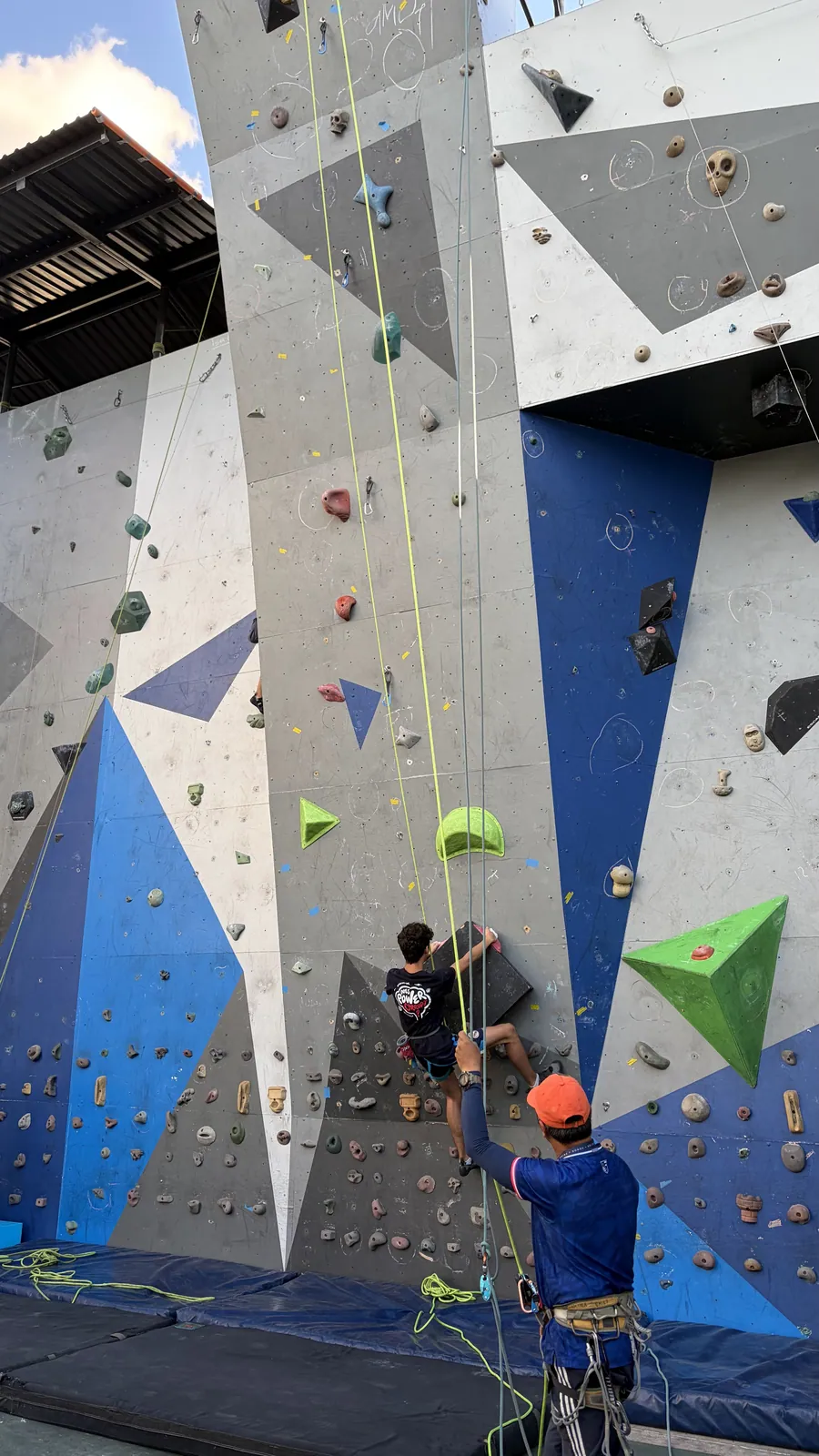
We do have teams. Our rock climbing team trains at Move and competes against the big schools. Another team trains at Gambeta and competes in the Liga Bilingüe. The training happens at nearby facilities rather than inside our campus.
What is the healthy food program, and is it optional?
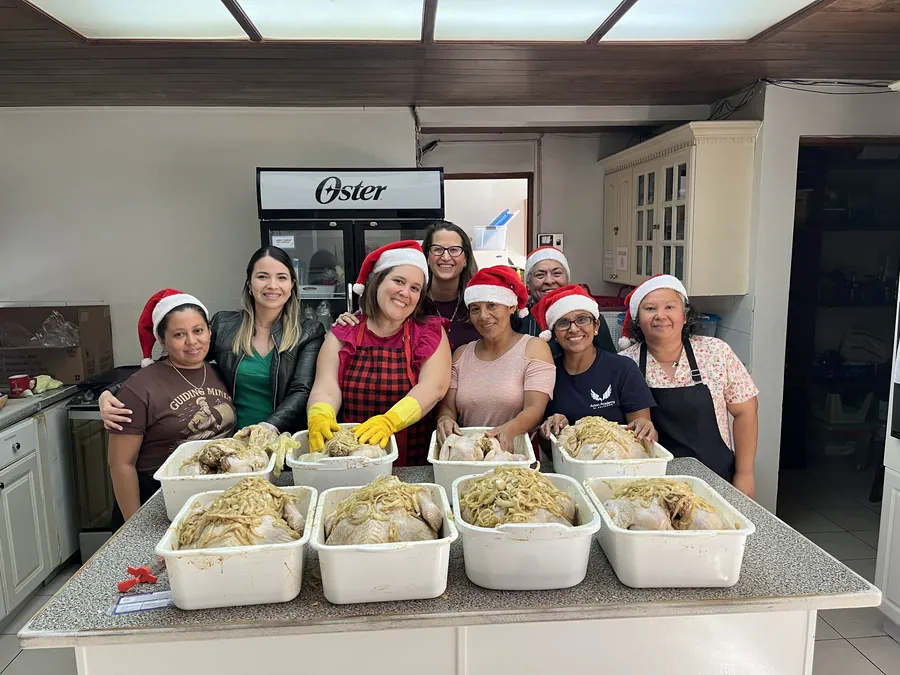
The food program is part of the learning environment, so it is included for every learner unless there is a documented medical reason. When we started, children were arriving with crisps, sweets and a Coke for lunch, and we decided that was not compatible with what we were trying to build.
We serve real homemade food, comida casera, every day, family style, on real plates with real glasses and real silverware. We avoid processed food, added sugar and disposable packaging, both for the children's health and for the environment.
There is a second reason for the real plates. When a child drops a ceramic plate, it breaks, and they see the consequence immediately without an adult scolding them. It is called control of error, and a plastic cup cannot teach it.
Do you offer extra help or services for children with special needs?
We do not offer specialised services for children with special needs. Acton is a highly independent, fast moving, learner driven environment, and we are not equipped to provide the level of individualised support that many learners require.
We want every child to thrive, and in some cases a more specialised setting is genuinely the better place for that to happen. We would rather tell you that honestly than take your enrollment.
Is there a uniform?
No. Learners wear what they prefer. We do ask you to buy one Acton T-shirt, worn on excursions so we can identify the group easily, and you may buy more if it makes mornings simpler.
For Spark Studio, kindergarten through second grade, and above, we also ask you to buy a personalised, high quality apron from us for art, science projects and cooking. It should last until they graduate, and they take it with them.
What payment methods do you accept, and do you accept Bitcoin?
Yes, we accept Bitcoin. We also accept bank transfer and credit card through a payment link, which carries an additional 4.8 percent. We do not accept cash.
Monthly payments are due on the 2nd of each month from August through June. There are three plans: one payment before 2 August for a 4 percent discount, two payments before 2 August and 2 December for a 2 percent discount, or 11 monthly payments.
How many Acton Academies are there in the world?
The Acton Academy network has more than 300 schools in 20 countries and it keeps growing. You can find a map of every location at actonacademy.org.
Where does the name Acton come from?
Acton Academy is named after Lord John Emerich Edward Dalberg-Acton, known as Lord Acton: a historian, moral philosopher and champion of individual liberty.
He spent his life studying how freedom and virtue shape great societies, and argued that real freedom requires character, self discipline and moral responsibility. That is exactly the centre of our learner driven approach.
The name stands for liberty with integrity, freedom earned through responsibility, a healthy scepticism of centralised authority, and the courage to stand by your principles.
What is the school year, and when can we apply?
Our academic year runs from mid August until mid June, and we accept applications year round. The enrollment fee is due before enrollment, and in April for families re-enrolling.